
Otoro Club/The Ceremony
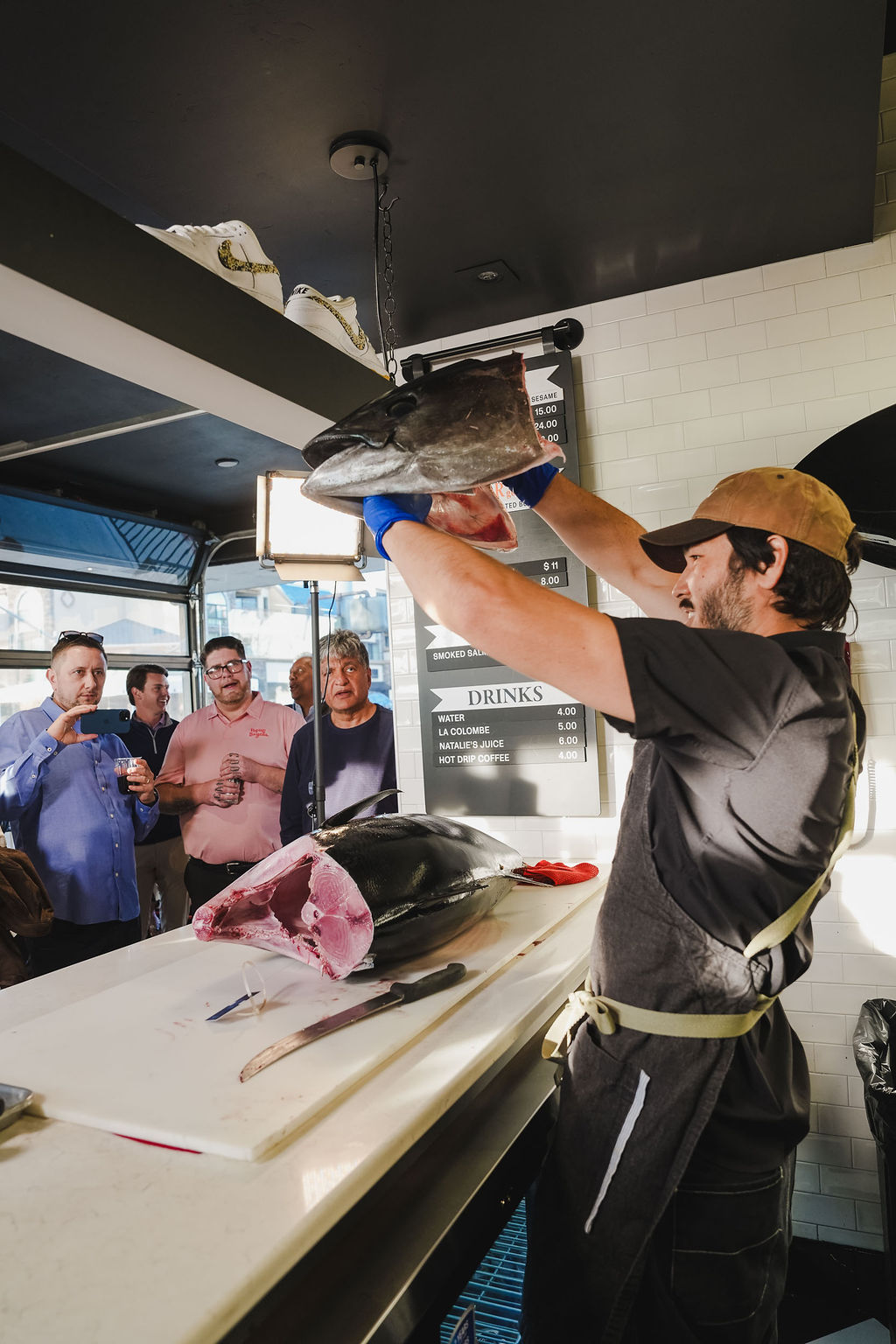
Maguro kaitai
Maguro kaitai, in the room.
A whole bluefin, broken down by hand in front of the guests over about forty minutes, and served in sequence as it is cut. No back-of-house. The ceremony is the programming — it decides how the evening moves.
What happens in the room
One fish, one continuous sequence.
The bluefin arrives whole and stays in view. Nothing is prepped out of sight.
The itamae opens the loin at a station in the room and works it down by hand, naming each cut in Japanese and English as it comes off the frame. Portions are passed as they are taken, so the first course a guest tastes was on the fish a minute earlier. The frame stays on the table until the last guest leaves.
Because the whole fish is present and the menu is the host’s, the room can be shaped around the cuts a restaurant rarely plates — the collar, the cheek, the spine scraped to order.
The four movements
Arrival. Breakdown. Tasting. Close.
Each engagement runs in four movements, in the same order every time — about three hours end to end. The room and the headcount change; the sequence does not.
The cuts, in sequence
Lean to fat, as the knife reaches them.
Akami
- The lean loin. Cut first, cleanest expression of the fish.
Chutoro
- The medium belly. The turn from lean to rich.
Otoro
- The fattest belly. Served last, at peak.
Kama · the collar
- A scarce cut a restaurant rarely plates. Two per fish.
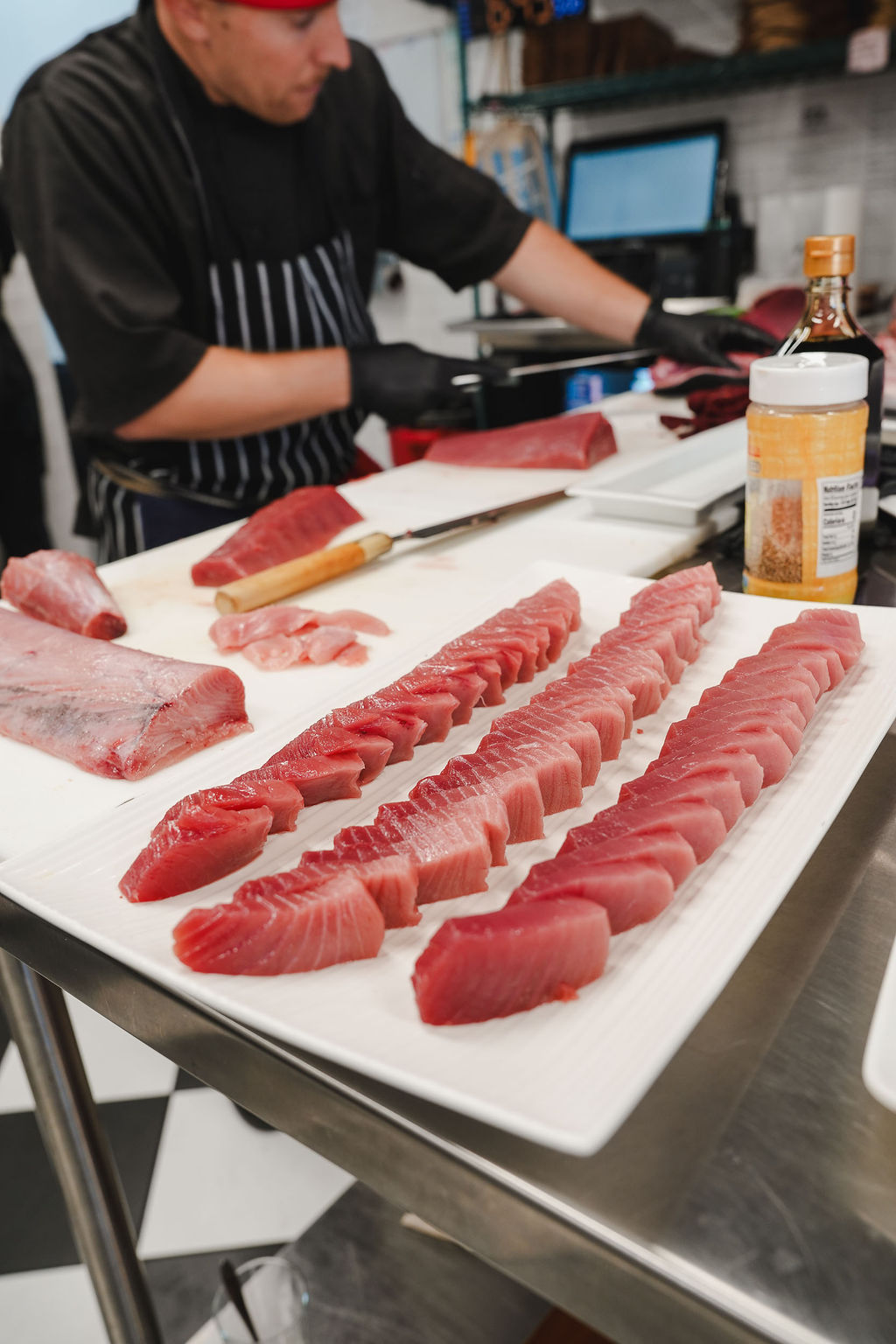
The itamae
One knife. One fish. In the room.
The chef at the board works the whole engagement in front of the guests.
The itamae leads the breakdown, sets the pace of the tasting, and keeps the room with the fish rather than a kitchen. A service team handles the station, the pass, and load-out, so the host does nothing operational.